Korvasieni is not in the range yet. This is a story, not cooking advice: follow the Finnish Food Authority's instructions.
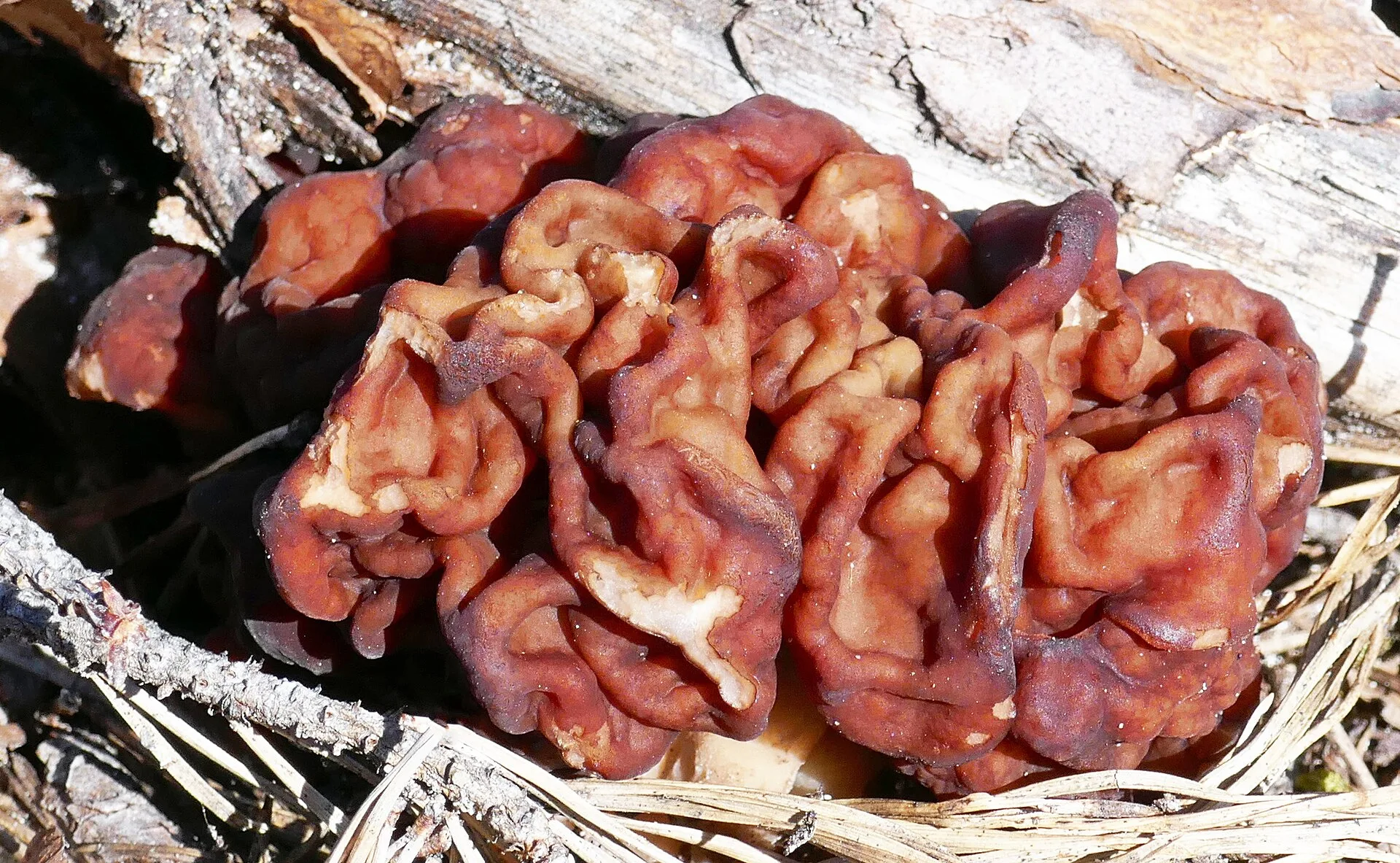
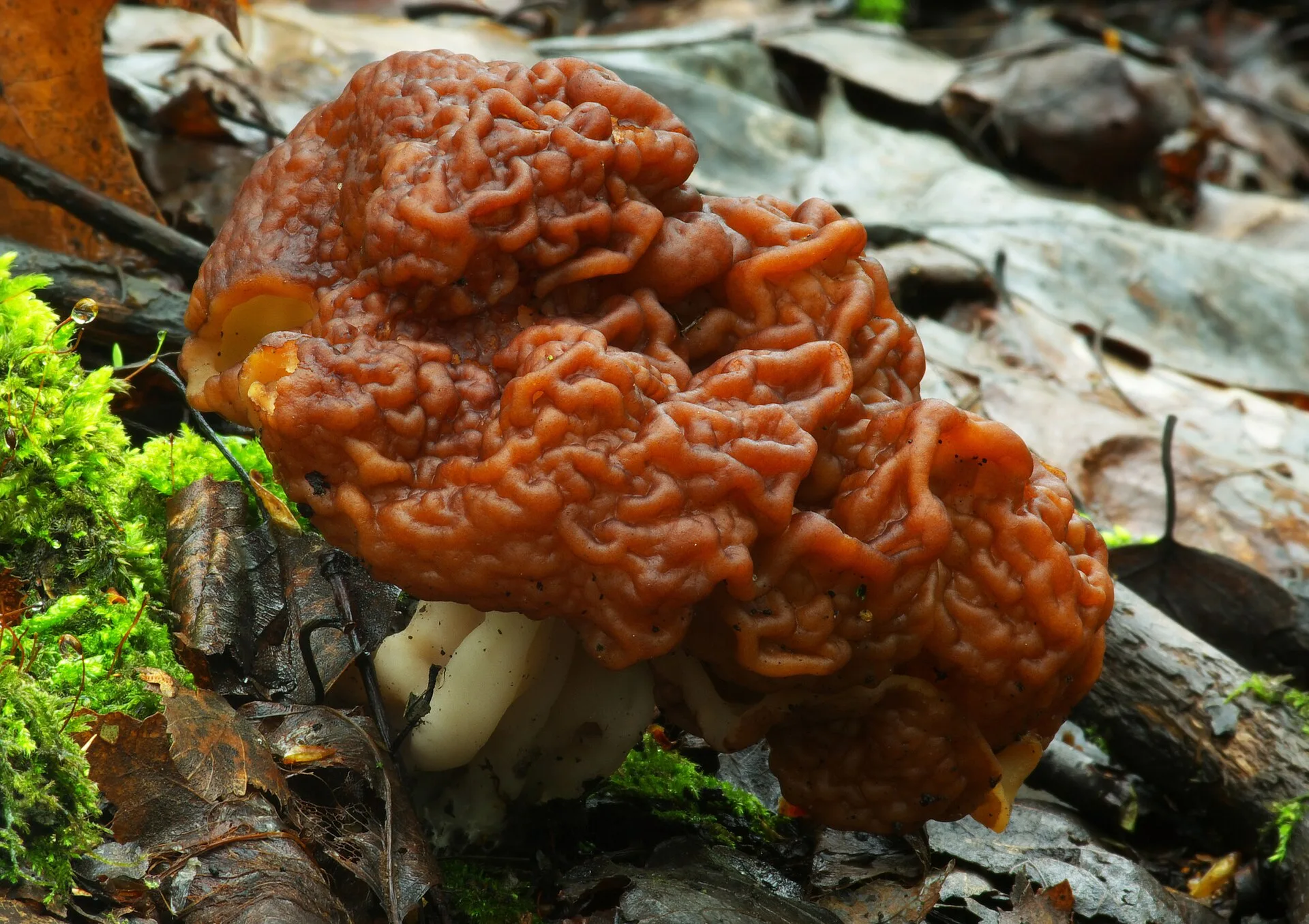
In May, when the first birch leaves open, a brown mushroom with a folded, brain-like cap comes up on sandy pine heaths, clear-cut forest and the edges of forest roads. Its Finnish name is korvasieni, "ear mushroom". In English it is the false morel.
Sources: Martat
Poisonous by nature
Korvasieni contains gyromitrin. In cooking and in the stomach it breaks down into monomethylhydrazine, the substance behind most of the symptoms: nausea, vomiting and diarrhoea, and in severe cases liver damage. Gyromitrin evaporates easily, so even the steam from the pot can cause poisoning.
Sources: Finnish Food Authority study 1/2025, Finnish Food Authority leaflet
The ritual, written into law
Every pack of korvasieni sold as food in Finland must carry a warning that opens with one line: "Korvasieni on myrkyllinen käsittelemättömänä." Korvasieni is poisonous untreated. Where it is sold loose, the same text must be displayed right next to it.
The instruction that follows is precise. Fresh mushrooms are boiled twice in plenty of water, one part mushrooms to three parts water, for at least five minutes each time, and rinsed well after each boiling. Dried mushrooms are first soaked for at least two hours. The soaking and cooking water is never used for food, and the kitchen is aired well while it all happens.
Sources: Decree 264/2012, Finlex
Finland's answer to fugu
In Japan, pufferfish can be prepared for sale only by a licensed handler. In Tokyo that licence comes from the city government after an examination, under an ordinance from 1986 that replaced one from 1949.
Finland has no licence for korvasieni. The instruction on the pack is the licence, and the cook at home carries the responsibility. Finland is one of the few countries where korvasieni may be sold as food at all. In Sweden the food agency advises against eating it, and it may be sold only after parboiling.
Sources: Tokyo pufferfish ordinance, Finnish Food Authority, Livsmedelsverket
What changed in 2025
In May 2025 the Finnish Food Authority reported that on average nearly one fifth of the toxin stays in the mushroom even after the two boilings, and drying can leave up to half. No safe level has been set. Korvasieni was taken off the authority's list of recommended edible mushrooms. The legal instructions stay the same, with advice not to eat it at several meals in a row. Children and pregnant or breastfeeding women should not eat it at all.
Restaurants split. One Helsinki restaurant kept its korvasieni dishes on the menu; one in Espoo dropped them.
Sources: Finnish Food Authority, May 2025, Finnish Food Authority leaflet, Kaleva
On the table
Those who still eat it use it in soups, stews and pastry fillings, a few weeks each spring. In a good year Finns eat up to three million korvasieni meals.
Sources: Martat, Finnish Food Authority, May 2025