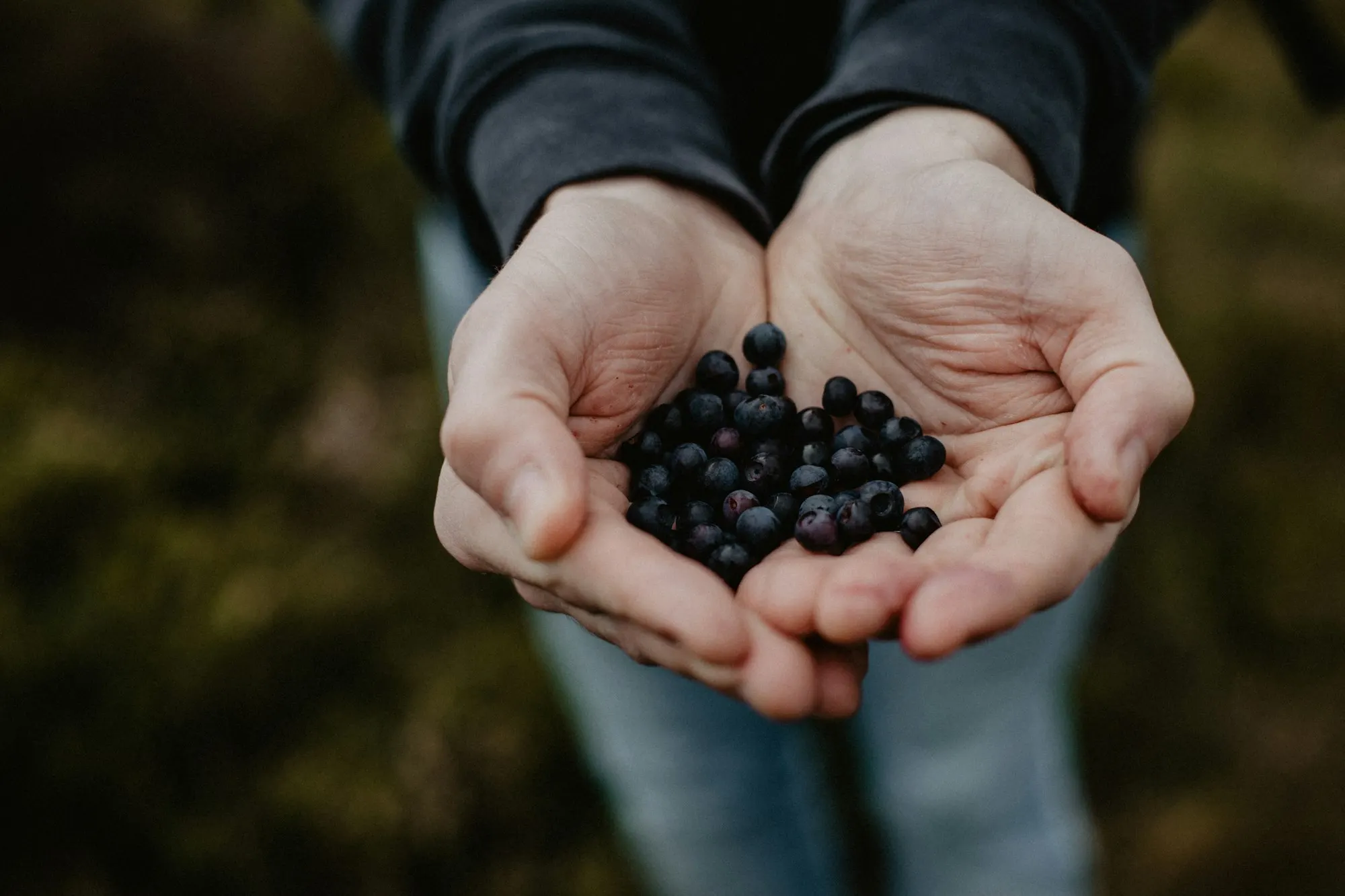
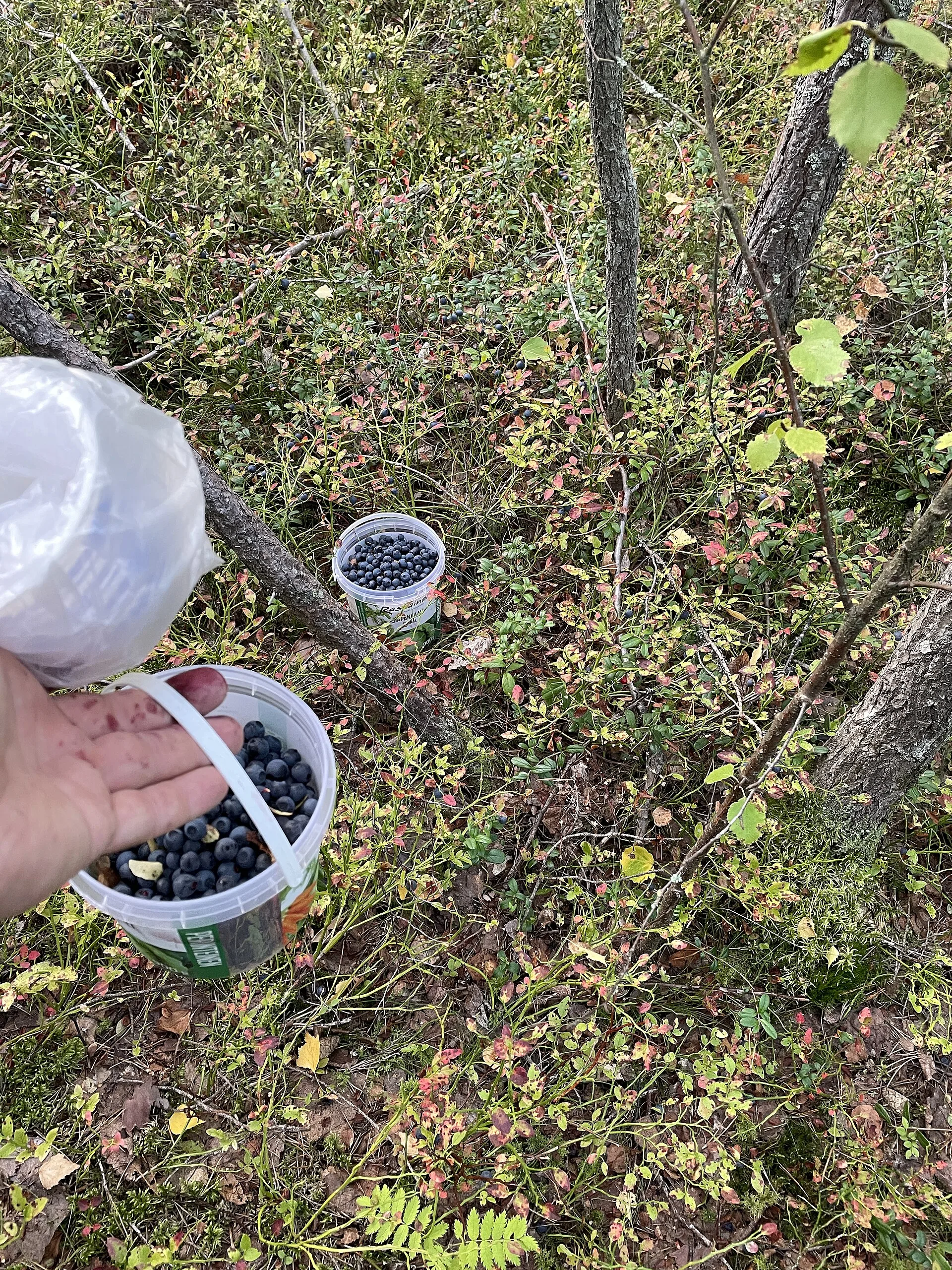
Finland, Sweden and Norway share a tradition often called everyone's right, or the freedom to roam. Anyone may walk in the forest, and pick wild berries and mushrooms, also on land they do not own. The right comes with care: keep a distance from homes, leave no damage and take only what nature gives freely.
In Swedish it is called allemansrätten, in Finnish jokaisenoikeus (formerly jokamiehenoikeus). For many Nordic families it means a basket, a pair of boots and a few hours in the forest on a weekend in August.
Wild berries are not planted or farmed. They grow on their own on the forest floor, among moss, pine and spruce, and they are picked where they grow. That makes every harvest a little different from the year before.
Picking time
Wild berries ripen through the Nordic summer. Bilberries, the wild blueberries of the forest floor, come first in high summer. Lingonberries follow in late summer and autumn, low red berries on evergreen shrubs. Mushrooms such as chanterelles appear as the late summer rains arrive, and many families go out with baskets every year.
From the forest to a product
Most wild berries are still picked by hand, or with a berry picker, a small comb-like scoop that lifts the berries off the shrub. The berries are cleaned and sorted, then frozen, dried or freeze-dried so they keep long after picking time ends.
Freeze-drying takes the water out while the berry keeps its colour and taste. That is how a wild berry can sit in an ambient cup on a hotel shelf or an airline trolley, and come back to life with hot water.
Where it appears in the range
Nordic Breakfast's Wild Lingonberry and Wild Blueberry porridge cups use freeze-dried berries with gluten-free oats. Only hot water and a spoon are needed.